Check out our White Paper Series!
A complete library of helpful advice and survival guides for every aspect of system monitoring and control.
1-800-693-0351
Have a specific question? Ask our team of expert engineers and get a specific answer!
Sign up for the next DPS Factory Training!
Whether you're new to our equipment or you've used it for years, DPS factory training is the best way to get more from your monitoring.
Reserve Your Seat Today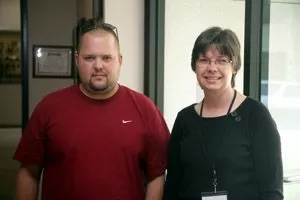
Nemont Telephone Cooperative relies on centralized alarm monitoring to keep visibility into network and facility equipment during business hours and to maintain coverage after hours. By deploying DPS Telecom T/Mon and NetGuardian RTUs and forwarding alarms to a higher-level monitoring partner, Nemont improved day-to-day troubleshooting efficiency and ensured continuity of oversight when the local team is off shift.
| Industry | Telecommunications (rural service provider) |
|---|---|
| Company Type | Telephone cooperative |
| Primary Challenge | Improve alarm coverage and maintain monitoring outside normal business hours |
| Solution Deployed | Centralized alarm monitoring with local display and 24x7 alarm forwarding to an after-hours monitoring partner |
| Key Result | More equipment alarmed and faster operational response through always-on alarm forwarding and clearer visibility |
| Implementation Timeframe | Deployed in 2006 |
| Products Used | T/Mon platform; NetGuardian RTUs |
Nemont Telephone Cooperative, Inc. (Nemont) was organized in 1950 to bring telephone service to rural communities. Today, its services include cellular, local, long-distance, internet, and cable TV. Nemont has been recognized in national media for its deployment of broadband technology in rural areas.
Central Office Technicians Allison Wang and Russell Foster work with Nemont's monitoring environment and shared how the team uses DPS Telecom monitoring to stay aware of network conditions across a wide mix of equipment.
"T/Mon is so much better than the system we had before. It saves time just having it."
Nemont needed a monitoring approach that did more than display a limited set of alarms. The team wanted broader visibility into multiple types of network elements and support systems, while also ensuring that alarms would still be handled outside normal business hours.
Because network and facility issues can occur at any time, the monitoring design needed to support two workflows:
Nemont deployed DPS Telecom monitoring in 2006. When evaluating equipment, Nemont looked to another trusted company for advice. Vision Net provides after-hours monitoring services for Nemont's network.
"Vision Net started monitoring for us," Wang said. "They had the DPS monitoring system in place, so we mirrored what they had. We monitor from 8 to 5. After hours, Vision Net has a schedule where they take over."
Wang has seen multiple monitoring systems in her 10 years working in the NOC environment. "We purchased T/Mon and NetGuardians in 2006," she said. "T/Mon is so much better than the system we had before. It saves time just having it. Fewer things were alarmed into the old system. With what we have right now, we see various pieces of equipment, including Calix and AFC."
"And the DMS-10, the DSU, everything," Foster added.
In typical DPS Telecom architectures, NetGuardian RTUs collect alarms and telemetry from field and facility equipment using discrete inputs, analog measurements, and protocol-based integrations (commonly SNMP). Those alarms are then centralized in the T/Mon platform, where operators can filter, acknowledge, and escalate events from a single interface.
Even as it displays alarms locally, T/Mon can forward alarms to a higher-level master station. This function protects Nemont's network outside normal business hours.
"Our T/Mon is forwarding 24 hours a day so, after hours and during lunches, Vision Net can watch our back," said Wang.
For telecom operations teams, this forwarding model helps maintain consistency in alarm handling because the local NOC and the after-hours partner can work from the same alarm stream and escalation expectations. DPS Telecom deployments commonly use forwarding to support:
After attending a DPS Factory Training session, Wang noted additional categories of monitoring that could be valuable for Nemont.
"My supervisor wanted to monitor generators and fuel levels, and that's something new that I didn't realize we could monitor. I'm bringing that back from Training."
In practice, these types of generator and fuel-level signals are often brought into a NetGuardian using discrete inputs (for states like run/fail) and analog inputs (for measurements like fuel level). Once collected, they can be alarmed, logged, trended, and forwarded through T/Mon alongside network equipment alarms. This unified approach is a common reason telecom providers standardize on DPS Telecom for both network and facility monitoring.
To display these and other data, Wang looks forward to using T/GFX geographic map software.
"A couple of our technicians started working on T/GFX," she said. "I'm hoping we'll be able to use it in our NOC."
Mapping and visualization tools can add operational context by linking alarms to sites and regions, helping operators quickly identify affected locations and prioritize response. When paired with the T/Mon platform and NetGuardian data collection, graphical views help teams move from an alarm to action with fewer manual steps.
While visiting DPS Telecom Headquarters for a week of training, Foster and Wang described a positive experience.
"I hadn't done anything with the T/Mon before Training," Foster said. "It worked out well: good teacher, friendly people. Everybody was friendly."
T/Mon platform - Central alarm monitoring, display, acknowledgement, escalation, and forwarding
NetGuardian RTUs - Alarm and telemetry collection from network and facility equipment
With forwarding enabled, alarms collected and displayed locally can also be sent to a higher-level monitoring station. This supports coverage during off hours, lunch periods, and times when the local team is not staffed.
Telecom teams often monitor transmission and access gear, legacy switching elements, and supporting infrastructure. In Nemont's environment, technicians referenced visibility into multiple equipment types through the monitoring system.
Generators are commonly monitored with discrete points (running, on battery, fail) and fuel levels are commonly monitored with analog measurements. NetGuardian collects these signals and passes alarms and status to T/Mon for centralized handling.
Centralizing events in T/Mon reduces the need for operators to check multiple interfaces. It also makes it easier to forward alarms, apply consistent escalation rules, and maintain a single operational picture.
To receive a price quote or ROI analysis...
Call 1-800-693-0351
Get a Free Consultation to discuss your monitoring requirements with DPS Telecom.