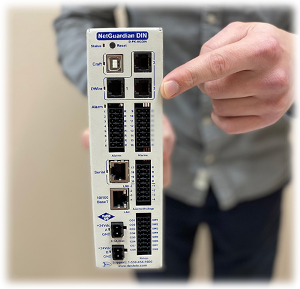
Download our free Monitoring Fundamentals Tutorial.
An introduction to Monitoring Fundamentals strictly from the perspective of telecom network alarm management.
1-800-693-0351
Have a specific question? Ask our team of expert engineers and get a specific answer!
Sign up for the next DPS Factory Training!
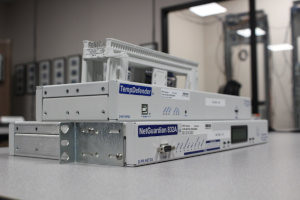
Whether you're new to our equipment or you've used it for years, DPS factory training is the best way to get more from your monitoring.
Reserve Your Seat TodayNV Energy supports electric service across Nevada, where it must monitor communications and site conditions over a wide territory. By deploying T/Mon LNX as a master station with NetGuardian RTUs, the team unified alarm collection and polling for both newer RTUs and legacy systems such as Badger and Larse, improving day-to-day visibility and remote operations.
| Industry | Electric utility |
|---|---|
| Company | NV Energy |
| Geography/Coverage | Nevada; power network stretching across 44,400 square miles; provides power for 2.4 million residents and millions of annual visitors |
| Primary Challenge | Monitor communications equipment and site conditions across a large service area while continuing to work with legacy and proprietary monitoring systems |
| Solution Deployed | T/Mon LNX master station collecting alarms and polling mixed-protocol remotes, including NetGuardian RTUs and legacy systems |
| Key Result | Centralized alarm visibility and polling without forcing a full monitoring swap-out; improved alarm point descriptions, web-based provisioning, and proactive temperature alarming at remote sites |
| Products Used | T/Mon LNX; NetGuardian G5 RTUs (including NetGuardian 832 models); NetGuardian 216 G3 RTUs |
NV Energy provides power for 2.4 million Nevada residents and the tens of millions of tourists that visit Las Vegas, Reno, and other state attractions annually.

Alwyn Ranola and Tom Parkes are communications technicians with NV Energy. They handle field installation and provisioning for NetGuardian G5 RTUs and also work with the T/Mon master station in the network operations center (NOC) to maintain alarm visibility across the network.
"We use the NetGuardians to poll Comm. equipment - muxes, SONET, and so on."
For a utility network that spans tens of thousands of square miles, alarm monitoring cannot be limited to a single vendor protocol or a single generation of hardware. NV Energy needed to poll and consolidate alarms from newer RTUs while continuing to get value from existing proprietary and legacy remotes already deployed in the field.
Without a central master capable of speaking multiple protocols, technicians would be forced to work across multiple master interfaces or undertake a full monitoring system replacement - both of which add cost and operational risk.
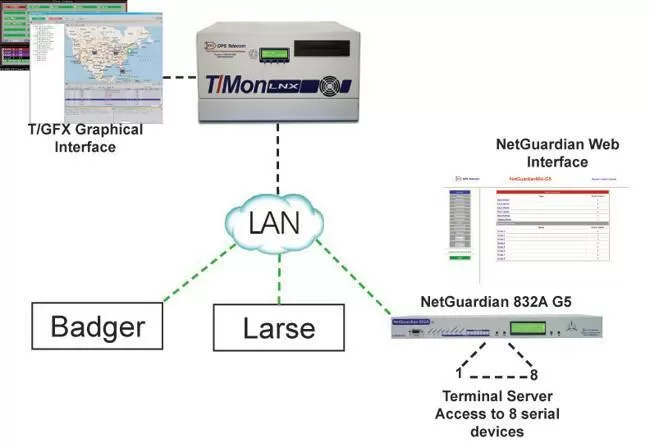
NV Energy uses a T/Mon master station to collect alarms from monitoring systems across its network regardless of protocol. In this deployment, T/Mon LNX is used to poll newer NetGuardian RTUs as well as proprietary and legacy remotes already in the network.
Because T/Mon is designed to aggregate alarm inputs from mixed environments, NV Energy can keep legacy equipment online while still improving visibility by expanding its footprint of NetGuardian RTUs.
"Badger and Larse systems - we use T/Mon to poll those," Ranola states.
From an engineering standpoint, this architecture supports gradual modernization: add new NetGuardian RTUs where it makes sense, keep the remotes that still have useful life, and use T/Mon LNX to normalize alarms into a single operational view.
Centralizing alarms is only part of the story. The usability and detail of the alarm points at each remote site can be the difference between a quick fix and a long troubleshooting cycle. As NV Energy upgrades sites to NetGuardian RTUs, technicians gain improved point descriptions and a web interface that supports efficient remote work.
"The NetGuardians are more descriptive as far as alarm points go. And there's the web browser - other systems don't do that,"
In practice, descriptive points help NOC operators and field technicians quickly understand what is in alarm (and where) without having to interpret cryptic labels. The built-in web interface supports remote provisioning and monitoring, which is especially valuable when sites are spread across a large geographic footprint.
Parkes also noted how analog and environmental monitoring fit into day-to-day operations:
"One of the things we've used more recently is temp sensors and analog inputs with voltage sensors," Parkes adds. "It's hot in the desert; if the AC has a problem, we want to know before it's too late, so we set temperature alarms to let us know if a site gets above 85 degrees."
NetGuardian RTUs support integrated, configurable temperature sensing and analog alarming, enabling NV Energy to alarm on site conditions and trends alongside communications equipment status. For utilities, this kind of site telemetry helps prevent avoidable outages caused by heat, cooling failures, or power problems at remote facilities.
NetGuardian RTUs can also be ordered with integrated data ports (RS-232, RS-422, or RS-485) that support access to serial-only devices. That capability can reduce the number of truck rolls required to diagnose or reconfigure equipment in the field.
"We can really utilize that. Some sites, where we don't have remote access, that'll be great," Ranola says.
Ranola and Parkes support both sides of the deployment: field installation/provisioning of NetGuardian G5 RTUs and T/Mon programming at the NOC. That combination helps ensure that point naming, alarm routing, and escalation logic match what is physically installed in the field.
They also attended a DPS Telecom factory training event covering NV Energy's upgraded T/Mon and deployed NetGuardians. The training environment allowed attendees to work directly on a dedicated T/Mon unit and explore databasing approaches without impacting a live production network.
"As far as provisioning T/Mon, I learned a lot more in-depth stuff that it could do," Parkes said. "I had no idea how deep T/Mon goes."
During training, they also discussed right-sizing RTUs for smaller locations, including using a smaller model when full input density is not required.
"Going to this class, we learned about some features and products we'll probably be introducing in the future. Like, at some of the smaller sites, we can use the smaller, cheaper NetGuardian," Parkes said, in reference to the NetGuardian 216 series RTUs.
The NetGuardian 216 G3 provides a smaller footprint and fewer alarm inputs than the NetGuardian 832 models NV Energy has deployed, while still supporting advanced features such as a web interface for remote access and provisioning.
"We have some sites with space limitations, and we don't need 32 points there. And the 216 still has the web browser," Ranola added.
Common questions from utilities and critical infrastructure teams evaluating alarm collection, mixed-protocol polling, and RTU modernization.
It means the same T/Mon LNX master can collect alarms from different monitoring sources and remote devices using multiple protocols. This helps teams keep working legacy remotes online while gradually adding newer RTUs like NetGuardian.
Clear point descriptions reduce time spent interpreting alarms and help operators quickly understand what failed, where it is located, and what action is likely needed.
They let teams alarm on environmental and electrical conditions (like high room temperature or abnormal voltage), which can indicate HVAC or power issues before equipment shuts down.
A built-in web interface supports remote provisioning and status checks. For large territories, that can reduce site visits and speed up troubleshooting when alarms occur.
For sites with space limitations or fewer required alarm points, a smaller RTU can still provide modern capabilities (such as web access) without overbuilding input capacity.
If you need to centralize alarm management across mixed protocols, keep legacy systems online, or modernize RTUs site by site, DPS Telecom can help you design the right T/Mon and NetGuardian approach for your network.
Get a Free Consultation or call 1-800-693-0351 to speak with a DPS Telecom expert about your project.